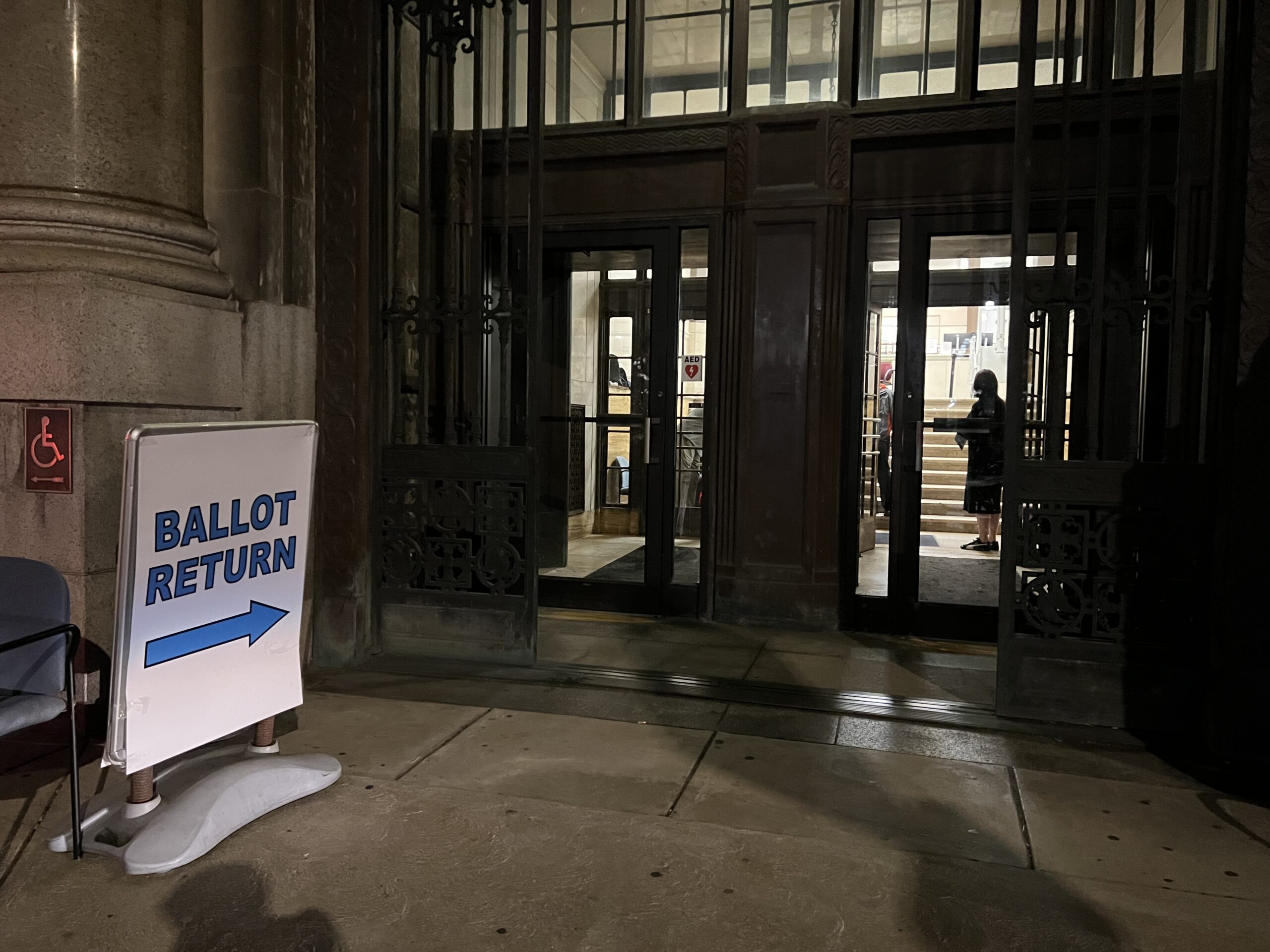
In chilly Downtown Pittsburgh, the smell of Primanti Bros. sandwiches wafts through the air as voters filter in and out of polling places, bringing another unmistakable scent with them: politics.
Pennsylvania voters are heading to the polls for a pivotal election featuring several high-profile races. Three state Supreme Court justices are seeking reelection, while additional seats are open on both the Supreme and Superior Courts. In Pittsburgh, the mayoral seat is also on the ballot, drawing interest from both new and experienced voters alike, eager to use their voices.
Around Downtown Pittsburgh, voters shared their opinions on why voting in this election matters to them.
“I don’t think enough people vote for the primaries and things like that,” DJ Richardson, 51, a North Shore resident, said.
Richardson believes that it is essential for people to participate in voting.
“I mean, for your liberties, for your rights, the people you put in position,” Richardson said.
Shelly Piccolomini, 41, from Uniontown, said this election is important because she wants to protect what she believes in. Piccolomini is focused on the economy this election because she works three jobs.
“I want to see leadership that actually helps small towns like ours instead of forgetting about us after Election Day,” Piccolomini said.
According to the Bureau of Labor and Statistics, in August, 163.30 million people were employed, and of them, 8.48 million held multiple jobs. Meaning that multiple jobholders now account for 5.2% of civilian employment.
Adele Munson, 21, is voting in the election. Munson is a political science student and thinks it is important to vote in every election.
Munson believes voter turnout for this election will be low, however. To Munson, the biggest issue is that information on voter registration and polling locations are not sufficiently accessible to community members.
Over the past few years, Pennsylvania’s top justices have left their mark on some of the state’s biggest debates. From how far privacy protections extend, to the future of cannabis laws, to how residents cast their ballots.
The courts one tier below, the Superior and Commonwealth Courts, handle much of the legal work that shapes life for Pennsylvanians day to day.
Meanwhile, at the local level, contests for positions like sheriff and school board will affect the direction of communities across Greater Pittsburgh.
Athena Psihudaki, 20, a Point Park student, plans to vote, because it is an “active way to contribute to what is going on.”
Some residents, however, feel like votes don’t make a difference.
Walrin Recondo, 58, a retired veteran from Aliquippa, is adamant about his decision not to vote.
Recondo believes that the government is a monarchy and that his vote won’t count. He said that he has recently been stripped of his food stamps.
SNAP benefits help 1.2 million veterans with low income across many states, according to the Center on Budget and Policy Priorities.
Recondo said that city funds should be used to help the homeless population, rather than constructing a Ferris wheel.
Jaylyn Brown, 23, who lives in Pittsburgh’s Hill District also said he has lost confidence in the impact of his vote.
“I feel like if I vote, it really doesn’t count…It’s like the higher power always wins,” said Brown “So there’s no point for me to keep voting.”
Whether voter turnout proves to be high or low, the day’s results may reveal less about who wins and more about who still believes their voice can be heard.
With a variety of seats open or needing possible reelection, voting in this midterm election will give citizens a chance to affect local, state and national issues.
Emalee Baker, Camani Campbell, Samuel Heasley, Hayden Mahoney, Sam Myrick, Cora Palanski, Michelangelo Pellis, Katie Portillo Rodas, Sabrina Smith, Yadelys Suarez, Benjamin Victor, and Nathan Zadrozny contributed to this report.
Photo by Cora Palanski